
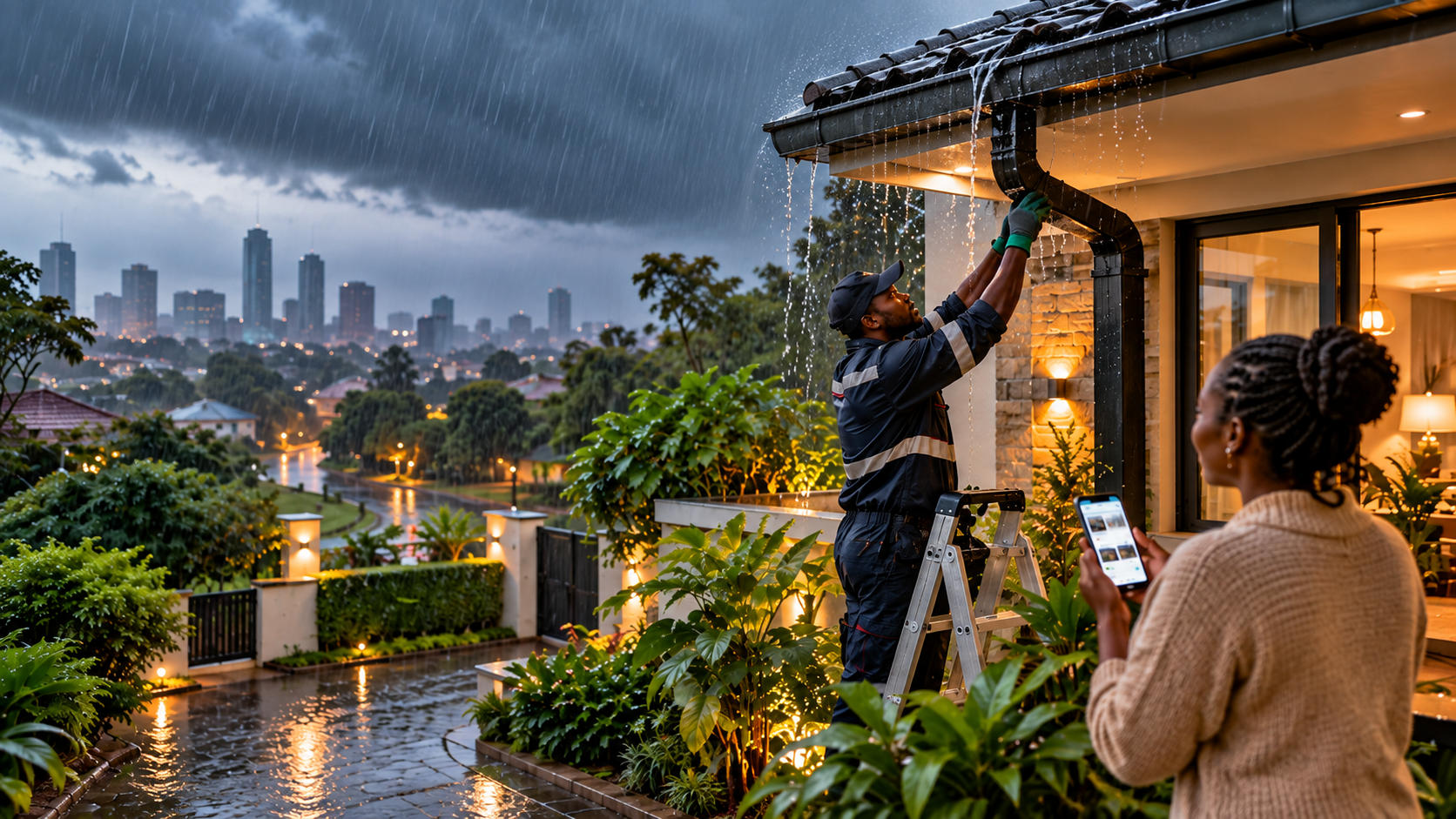
There is a particular kind of Kenyan conversation that begins when the sky turns almost black in the middle of the afternoon. Someone checks the gutters. Someone moves the laundry. Someone asks whether the road home will still be passable. And, inevitably, someone says: "Hii mvua si ya kawaida."
This year the worry has a forecast behind it. Kenya is into the October to December 2026 rainfall season, and the outlook points to wetter than normal conditions in several parts of the country. The Kenya Meteorological Department says the rain has already started in places and will spread, and it warns about flooding, waterlogging and landslides.
El Niño and a positive Indian Ocean Dipole sit behind that outlook. The World Meteorological Organization has reported an increased chance of wetter than normal conditions across parts of the Greater Horn of Africa for the last quarter of the year.
None of that means every home will flood. Weather is local, forecasts move, and El Niño is not the only thing deciding what happens over one estate on one afternoon. But for anyone renting or owning in Nairobi and beyond, the arithmetic is simple: the same work costs less before the water arrives than after.
What a small leak turns into
The first drops are easy to dismiss. A stain on the ceiling. A gutter that only overflows in a heavy shower. A door that stops closing properly because moisture has got into the frame.
Water is patient, though. It finds a gap, follows the wall and settles under the finishes. Out of sight behind a cabinet or above a ceiling, it feeds damp and mould, and it goes looking for the weak points in your wiring.
In a season forecast to be wet, maintenance is the cheapest insurance in the house.
Before the next big downpour
Walk the roofline and look at the sheets or tiles. Clear the gutters and downpipes, then check where they discharge. Look up at the ceilings for stains. Follow the drainage around the compound. Trim the branches that could come down on a roof or a line. Test the outdoor and backup lighting. Then get the number of someone qualified, before you need it at 9 p.m. on a Sunday.
The household checklist
It helps to split the home into five areas: the roof, water and drainage, electricity, access, and the people you call when one of them fails.
1. Roof and gutters
Look for missing or cracked roofing material, loose flashing, blocked gutters, and downpipes that empty too close to the foundation. If the job needs someone on the roof, pay someone who does it for a living. A blocked gutter is not worth a fall.
This is roofing and gutter work.
2. Water and drainage
Water needs somewhere to go. Clear the external drains, open the channels around the compound and get out the leaves, plastic and whatever else has collected. A drain that backs up every time it rains has a drainage problem, and no amount of cleaning will fix that.
Drain clearing and sanitation, or plumbing and sewer repair if the problem is underground.
3. Electricity
Keep sockets, extension cables and appliances clear of standing water, and make sure outdoor points are properly covered. If water has reached wiring or a socket, switch off at the mains and call a qualified electrician. This is not the place to improvise.
Electrical repairs and fault finding.
4. Access
Heavy rain can make a route impassable in minutes. If the property has a steep driveway, a low entrance or an access road that floods, plan around it rather than finding out mid-storm. If you are on a ground floor in a known flood spot, moving documents and electronics up a level is cheap insurance, and movers can do it in a morning.
5. The people who keep a home running
Plumbers, electricians, roofers, cleaners, appliance technicians and handymen are the ones who find out what the weather has exposed. Problems that developed quietly over months show up in a single wet weekend.
One more worth adding to that list: pest control. Rain drives cockroaches, rodents and termites indoors and into roof spaces, and treating a house before that happens is cheaper than treating it after.
Finding the right person is the hard part
For years, finding help in Kenya has run on a familiar chain: call a friend, ask a neighbour, post in a WhatsApp group, make three phone calls, compare prices, and hope the person actually shows up.
Technology can shorten that chain.
miGuy exists to shorten it. Someone with a job that needs doing at their house should be able to open an app, see providers who do that work, and book one, instead of running the whole chain on word of mouth. No app fixes a roof. What it can fix is the hour you lose trying to find somebody who will.
The gap matters most in bad weather. A blocked drain at 10 a.m. is maintenance. The same drain after hours of heavy rain is an emergency.
miGuy covers short-term physical jobs done at the customer's location, across more than 40 service categories: plumbing, electrical work, cleaning, appliance repair, roofing, pest control, automotive. Every category shows a starting price before you book.
When the ceiling is already dripping
Picture water coming through a ceiling. Nobody in that moment goes looking for an article about roofing. They want the dripping to stop.
So speed is the point. A marketplace earns its keep by cutting the time between a problem and the person who can solve it: describe the job, find the category, pick a provider, and run the whole thing in one place.
The cost of putting it off
Households rarely pay once for the same problem.
A loose gutter becomes water damage, and water damage becomes a ceiling repair. Drainage you ignored becomes a flooded compound. A minor appliance fault becomes a dead appliance.
The money argument is obvious. The quieter one is that a home should be the place where you stop thinking about the weather.
If you have noticed the same problem twice, get someone to look at it.
What El Niño actually tells you
El Niño starts in the tropical Pacific, but it moves weather far beyond that region. In East Africa, a strong El Niño, especially alongside a positive Indian Ocean Dipole, raises the chances of a wetter season in some areas.
Kenya's meteorological authorities keep making the same point: rainfall here answers to several climate systems at once, and both onset and intensity vary by location. Read the county forecast, not the national headline.
Make it a monthly walk-around
Once a month beats once a crisis.
- Walk the perimeter and note where water collects.
- Check the gutters, downpipes and drainage channels while you are out there.
- Look at ceilings and walls for new damp patches.
- Try the doors, windows and locks for water getting in.
- Keep the contacts you would need saved and reachable.
- Follow the official weather and emergency advisories instead of WhatsApp forwards.
Physical services are next
This goes past one rainy season.
Across African cities, people already run daily life from a phone: ordering food, moving money, booking transport, shopping, dealing with businesses. Physical work is the layer that has not caught up.
The plumber still has to turn the wrench and the electrician still has to test the circuit. The cleaner still has to show up. Software does none of that. It makes those people easier to find and easier to coordinate.
That is what miGuy is building: one place to find people who can get things done, instead of six phone calls and a group chat.
What you can actually control
Kenya's 2026 season will not look the same everywhere. Some areas will get intense rain, others something milder, and the forecasts will keep shifting as the season goes.
Preparation is the part that stays in your hands.
Clear the gutter before it overflows. Patch the leak while it is still a leak. Test the drainage yourself, before the rain tests it for you. And when the job is past the weekend list, call a professional while the problem is still small.
Save the number now. You do not want to be searching for it with water coming through the ceiling.
If you work in any of these trades
This is the busiest season of the year for roofers, plumbers, electricians and pest control. Put your services on miGuy so customers in your area can find you. Joining is simple and there is no registration fee.
Frequently asked questions
When do the El Niño rains start in Kenya?
The Kenya Meteorological Department expects the October to December 2026 season, with onset forecast for the second to third week of October in Nairobi, the central highlands and the coast, and the third to fourth week in southeastern counties. Western Kenya has had continuing rain since September.
What should I check around the house before the rains?
The roof and gutters, the drains around the compound, your outdoor electrics, your access route, and anything stored at ground level if you are in a flood prone area. Water first, power second.
How much does it cost to clear a blocked drain in Nairobi?
Plumbing jobs on miGuy start from KES 800 and sanitation work from KES 2,000, with the final price depending on the job. Every category on the services page publishes its starting price.
Does El Niño mean my area will definitely flood?
No. El Niño raises the probability of a wetter season across a region, but onset and intensity vary by location. Kenya's meteorological authorities advise reading county level forecasts rather than a single national outlook.
About miGuy
miGuy is a mobile-first marketplace connecting customers with service providers for short-term physical tasks completed at the customer's location, across more than 40 categories from household maintenance and cleaning to technical, automotive and professional services. It currently operates in Nairobi, Mombasa, Kisumu, Kitengela and Thika.
The miGuy Editorial Team publishes practical stories about technology, business, services, home and lifestyle, and the changing ways people get things done.
Editor's note
Weather information changes quickly. This article reflects information available on 2 October 2026. Readers should consult the Kenya Meteorological Department and their county authorities for the latest location-specific forecasts, warnings and emergency guidance. It is general household preparedness information and not a substitute for professional engineering, electrical, medical or emergency advice.